
Sitting for long hours? These 10 exercises can help correct your posture and relieve stiffness. Practice them every day to feel relaxed!
If you spend long hours sitting, whether at a desk, on the couch, or scrolling through your phone, you risk several health problems. Modern lifestyles have made sitting almost inevitable, but our bodies aren’t designed to stay still for that long. Over time, this leads to stiffness, muscle weakness, poor posture, and even chronic pain. What can be a quick solution to this problem? A few simple exercises can relieve much of this tension.
According to sports physiotherapist Dr Karishma Sanghavi, consistent mobility work and posture-focused exercises help the body stay strong, flexible and balanced. The expert shares with Health Shots some simple, beginner-friendly exercises you can do daily to feel lighter, move better, and reduce discomfort.
What happens if you sit for long hours?
Sitting for long periods of time slowly affects the body in ways we don’t notice at first. Your legs and glutes weaken because they aren’t activated enough, affecting your balance and strength. Long hours spent sitting also slow down the metabolism, making it easier to gain weight. Poor posture leads to back, shoulder and neck pain. Over time, it can even affect heart health. A study published in the British Journal of Sports Medicine found that people who sit longer have a 147% higher risk of suffering a heart attack and stroke. Sitting for too long can also increase stress and reduce overall mobility.
Exercises to correct body posture
Here are some of the best stretches and exercises to support body posture and boost mobility to reduce the side effects of long hours of sitting:
1. Gluteal bridge
This exercise strengthens weak glutes caused by prolonged sitting. They also improve lower back stability and posture by supporting the spine. Follow these steps to run it:
- Lie on your back with your knees bent and your feet flat on the floor.
- Keep your arms at your sides and engage your core.
- Press your heels into the floor and lift your hips upward.
- Squeeze your glutes at the top and hold for a second.
- Slowly lower your hips toward the floor.
2. Hip Flexors Stretch (Low Lunge)
“This stretch helps release the hip flexor muscles that shorten from long hours of sitting. It improves walking posture, reduces tension in your lower back, and allows your hips to move more freely,” says Sanghavi. Follow these steps to run it:
- Start on your knees on the mat.
- Step your right foot forward into a lunge, keeping the knee above the ankle.
- Gently move your hips forward until you feel a stretch in your left hip.
- Keep your chest lifted and your shoulders relaxed.
- Switch sides after holding for 20 to 30 seconds.
3. Cat-cow stretch
The cat cow increases spinal mobility and reduces stiffness caused by slouching. It also improves posture by promoting fluid movements throughout the spine. Follow these steps to run it:
- Start on all fours in a tabletop position.
- Inhale and arch your spine, lifting your chest and tailbone (cow).
- Exhale and round your spine by tucking your chin and pelvis (cat).
- Slowly move between these two positions, synchronizing the breathing with the movement.
- Repeat for 8 to 10 rounds.
4. Chest Opening Stretch
This stretch counteracts rounded shoulders and tight chest muscles caused by screen time. It helps you stand taller and maintain an upright posture. Follow these steps to run it:
You may also like


- Stand straight and clasp your hands behind your back.
- Gently lift your arms as you open your chest.
- Roll your shoulders back and down.
- Hold the stretch for 20 to 30 seconds while breathing deeply.
- Slowly release and relax your arms.
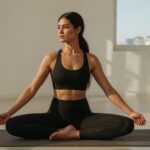
5. Rotation of the thoracic spine
Thoracic rotations improve upper back mobility, reduce stiffness, and help correct a hunched posture. They also improve rotational movements for daily activities. Follow these steps to run it:
- Sit or kneel with your back straight.
- Place your hands lightly behind your head.
- Gently rotate your upper body to the right without moving your lower body.
- Hold for a second, then twist to the left.
- Repeat the movement 8 to 10 times on each side.
6. Bird dog
This exercise strengthens the core, back and gluteal muscles, improving balance, stability and posture. It also helps support the spine during daily activities. Follow these steps to run it:
- Start on all fours with your core engaged.
- Extend your right arm forward and your left leg backward.
- Keep your spine neutral and avoid arching your back.
- Hold for a moment, then return to the starting position.
- Switch sides and repeat 8 to 10 times.
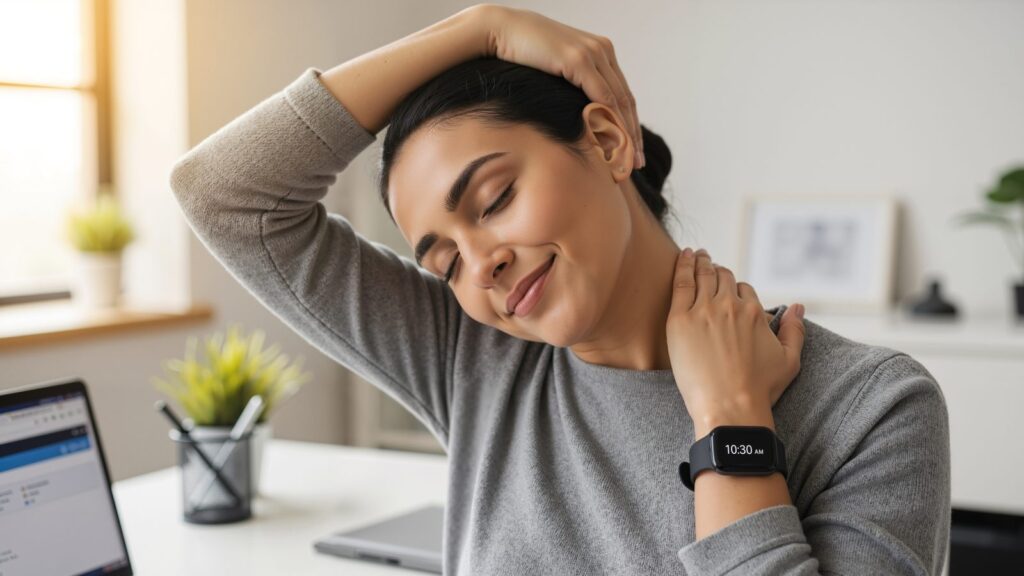
7. Neck Mobility Circles
Sanghavi says, “These neck circles release tension in the neck, improve mobility and reduce stiffness associated with staring at screens for long hours. » Follow these steps to run it:
- Sit or stand comfortably with your shoulders relaxed.
- Slowly turn your head clockwise in a full circle.
- Move gently and avoid straining your neck into discomfort.
- Repeat the circle counterclockwise.
- Perform 5 to 6 circles in each direction.
8. Downward facing dog
This stretch lengthens the entire back of the body, including the hamstrings, calves and spine. This helps improve posture and flexibility. It also reduces stiffness due to long hours of sitting. Follow these steps to run it:
- Start in a plank position with your hands under your shoulders.
- Lift your hips upward to form an inverted V shape.
- Keep your spine long and gently press your heels toward the floor.
- Relax your neck and breathe deeply.
- Hold for 20 to 30 seconds.
9. Standing calf raises
Calf raises strengthen the calf muscles and improve ankle mobility, which helps promote better balance and posture throughout the day. Follow these steps to run it:
- Stand straight with your feet hip-width apart.
- Slowly raise your heels to stand on your tiptoes.
- Hold the position for a second.
- Lower your heels with control.
- Repeat 12 to 15 times.

10. Spinal rotation
This exercise relieves lower back stiffness and increases spinal flexibility, helping you sit and stand more comfortably. Follow these steps to run it:
- Lie on your back with your knees bent and your feet flat.
- Gently drop both knees to one side while keeping your shoulders on the floor.
- Hold the stretch for 20 seconds and breathe deeply.
- Bring your knees back to center.
- Repeat on the other side.
Who should avoid these exercises or do them with caution?
Most of these moves are beginner-friendly, but some people may need to be careful.
- Anyone with recent injuries, especially to the back, neck, knees, hips or shoulders, should only perform these exercises after consulting a doctor or physiotherapist.
- If you have severe arthritis, a herniated disc, sciatica, uncontrolled high blood pressure, or are recovering from surgery, some basic stretches and exercises may not be suitable.
- Pregnant women should also modify poses like downward dog, deep lunges, or intense back movements.
If an exercise causes sharp pain, numbness, dizziness, or unusual discomfort, stop immediately.
#exercises #improve #posture #mobility #sit #day